Archive for the ‘Uncategorized’ Category

6 Parts of Running a Successful Office Building

Posted by

What does it take to run a building?

Operating and maintaining a thriving, well occupied office building is a complex process. While a lot of peoples’ first reaction is to either praise or blame the leasing agent for what goes on in the building, there is much more to the equation.

It is truly a team effort, starting at the very top with the building owner and trickling all the way down to the maintenance staff.

Let’s take a closer look at the parties involved and the significant roles that each plays:

1) Ownership – Ownership must be committed to investing in the property on several levels. As the saying goes, you need to spend money to make money, and that is so true when it comes to office buildings.

Ownership needs to ensure that the building always shows and functions well. The common areas need to have a fresh appearance and the necessary amenities that tenants crave need to be provided.

Also, all of the vacancies should be either in a move-in ready state, or sufficiently cleaned up in order for the building to be as attractive as possible on tours.

Finally, ownership must make sure that the building is well staffed with quality individuals who are given the flexibility to do their jobs well.

2) Property Manager – The property manager is another essential cog in the machine. The property manager is tasked with effectively implementing the orders and vision of ownership, as well as overseeing the daily activities of the building.

Managers are responsible for developing and adhering to budgets, supervising building staff and outside contractors, and making sure that tenants enjoy their experience.

A manager’s relationship with his or her tenants is often an important factor in whether they elect to renew their lease.

3) Engineering Staff – Building engineers are often the unsung heroes.

Not only are they tasked with ensuring that the building functions well on a day-to-day basis from a mechanical standpoint, but they also need to be ready to act quickly and decisively when the inevitable crisis occurs.

Most reasonable people understand that things are going to malfunction on occasion, so how the engineering team responds goes a long way toward solidifying relationships and formulating attitudes.

Their frequent interactions with tenants serve as a bridge between ownership and management and these personal relationships can often be the difference between a tenant renewing and moving.

4) Building Personnel – Another component of creating a positive work environment is the building staff; starting with the security guards who greet people when they walk in the door every morning, to the cleaning staff at night who make sure that the premises are spotless for the next morning.

Tenant service coordinators, parking garage attendants and concierges, where applicable, all help create and maintain a positive atmosphere.

5) Outside Contractors – The outside vendors who do work in a building, whether it be for construction, voice/data wiring, architectural and engineering services, web designers and marketing agencies, are all an extension of the property and help build upon the first impression and create a positive image.

6) Leasing Agent – Last but certainly not least, the leasing agent plays a vital role.

As the ones in the trenches, agents are often responsible for attracting new tenants and retaining existing tenants by negotiating renewals.

The agent coordinates all marketing programs and crafts an image of the building to the public that promotes the finer points of the property. The hope is to get prospects through the door for showings and ultimately convince them to lease space.

Agents also must keep ownership educated on current market conditions and trends and where the property falls within that realm.

The direction provided by agents will help ownership determine the most prudent areas to invest their funds.

With all parties working together collaboratively, a building is much more likely to enjoy success and become a desired address.

What your office says about you

Posted by

Where a business chooses to office sends a powerful message to the public and in many ways, defines who and what your business is all about.

Your setting will dictate the type of employees you attract, how successful you are in retaining them over time and how you are viewed by your clients.

Here are a few things to think about when you’re leasing an office for the first time, or relocating an existing office:

1) Location – Are your employees coming from the city or suburbs? How do they get to work every day–public transportation, driving or biking?

If you are a firm who has clients frequently visit the office, how easy will it be for them to get to you?

2) Expansion Plans – Are there plans to grow the business? If so, what type of space and location do you need in order to attract quality labor?

3) Vibe – What type of atmosphere are you trying to convey?

Are you a creative firm that values a loft space with exposed brick and columns, timber or concrete ceilings and wood floors, or are you more of a professional firm that favors the traditional dropped ceiling with florescent light fixtures?

Do you want your employees collaborate with each other, or should they have private offices for personal time for concentration, meetings and phone calls?

4) Economics – Of course, money always plays a significant role in any key decision.

How often will existing or potential clients visit the space?

Do you need to impress them with a Class-A-caliber-building featuring panoramic city views and an immaculate lobby, or are you content leasing at a more budget minded, no frills property with a convenient location?

5) Perception – If you choose to locate in a higher end property and bill your clients on an hourly basis, how will your clients perceive your opulent office?

Will they feel like their fees are going straight towards supporting your Lake Michigan views as opposed to the services you are providing?

Will clients feel like they can better relate to an “average guy” and be more inclined to do business with a firm in a respectful, nice, middle of the road atmosphere?

On a related note, if you are a design-oriented firm, will a prospective client pre-judge your ability to complete the task based upon your cutting edge, uniquely designed office space? There’s a lot to say about the appearance of your office.

6) Amenities – Do you and your employees require features like an in-building fitness center, conference facility, cafeteria, concierge service, rooftop deck, bike storage or parking?

Several buildings offer some or all of these features, but make no mistake, you will be paying for it in the form of higher rent.

If these items help you attract and retain employees while keeping everyone happy and productive, however, it might be money well spent.

When it comes time to start or renew a lease, it is essential to run through this check list to ensure that the location is helping to shape the business in the manner that you want it to be perceived by employees, clients and the public.

With this list and a little luck, you’ll find the perfect office and start moving your business forward in a new, positive direction.

Running a successful office building part 2

Posted by

On the northwest corner of Monroe and Clark sits the latest addition to a seemingly endless supply of new hotels in downtown Chicago: Hyatt Centric The Loop.

Prior to the hotel, this fairly nondescript building was one of the best kept secrets in the Loop.

The businesses and individuals who were fortunate enough to maintain an office in this property at some point during its 85 year run, however, know that not only was it one of the best run structures in downtown Chicago, but also a true model on how to successfully operate office building.

Established in 1927, 100 West Monroe was a supremely located building in the heart of Chicago’s Central Loop.

Historically, it has been best known for its “cow path” (more on this in a future blog) and being the location of Chicago real estate legend Arthur Rubloff’s original office.

While there were some rough patches over the years, 100 West Monroe was prosperous and well occupied by professional and entrepreneurial. I was fortunate to not only be the leasing agent there for 16 years, but also a tenant.

100 West Monroe’s sustained success all started at the top with the owner.

The building was controlled by a family partnership who purchased the property in the early 1960’s and maintained control until it sold in 2012.The majority of their ownership tenure was debt free and they were diligent about reinvesting some of their profits back into the property.

Every year, they would pick a specific area to update, whether it be the lobby, elevators, common corridors or mechanical systems.

They would always budget funds for improving vacant suites prior to leasing so the product would show at its very best to prospective new tenants.

Ownership also made sure to have a dynamic team working along side.

The property manager was a seasoned veteran who knew exactly what was needed to operate a thriving property. He always spent money wisely and maintained a positive relationship with both his tenants and staff.

He was tough when necessary, but was universally respected and genuinely well liked. Undoubtedly, his relationships formed over the years were a key reason why few tenants ever moved out and why there was virtually no staff turnover. The two building engineers were among the finest downtown.

Both were employed at 100 West Monroe for over 30 years and treated the building like it was their own.

In addition to their expert care and maintenance skills, most tenants came to view them as friends.

Not only did they know just the right temperature to set each office suite, but they also made it a point of leaning everyone’s name and about their families and businesses.

These small details helped make the building a nice place to be.The rest of the staff was stellar as well.

The security guards always greeted people by name every morning as they arrived and were always ready to chat about the game from last night, weather, politics and other world events.

The cleaning crew was incredibly dedicated as well, and the building always sparkled.

Outside contractors enjoyed doing work at 100 West Monroe and typically went above and beyond the call of duty in order to continue getting the business.

Working in this unique atmosphere made my job as leasing agent easy. Once the building hit 90% occupancy in 1999, there was no turning back.

We hit 100% in 2000 and never fell below 96% for the remainder of the building’s office history.

Sure, the location was an asset, but the strong ownership, dedicated management and wonderful staff all contributed toward tenants thoroughly enjoying their experience.

We may not have had the amazing views, modern features and amenities offered at other buildings, but no one could compete with our responsiveness, personalized touch and attention to detail.

Everyone got along incredibly well and worked together seamlessly. This trickled down to the tenants, who all coexisted like one big happy family.

When 100 West Monroe sold in 2012, the new owner elected to exercise a clause which gave him the ability to terminate all of the leases.

Most people never took it all that seriously, but it happened and shock and sadness soon followed.

It was the end of an amazing era.

I learned real estate at 100 West Monroe and more importantly, how to do things the right way.

As I run into former tenants today and ask about their new building, the one constant comment is that “it is no 100 West Monroe.”

If every building operated as well as this one did, the wild world of downtown Chicago real estate would be much more tolerable.

The 2015 Top Ten Events In Downtown Chicago Commercial Real Estate

Posted by

2015 has been a wild and crazy year in Downtown Chicago commercial real estate. In my 20 years in the industry, this is the most active phase that I can ever recall.

In tribute to the great David Letterman, from the home office in Chicago, Illinois, here are my Top Ten Chicago commercial real estate highlights for 2015:

10) Block 37 finally emerges as a significant destination. After decades of futility, the former “hole in the center of the Loop” transformed from a sleepy mall into the anchor for the State Street retail district. The recent additions of Latinicity and the AMC Dine-In movie theaters have complimented the existing retailers and substantially increased foot traffic. Upcoming additions include The Dearborn Restaurant on the corner of Dearborn and Randolph and a 690-unit, luxury apartment building currently under construction above the mall.

9) Advances in public transportation. The overwhelming desire of so many office tenants wanting to be close to Union Station and Ogilvie Transportation Center has been a key factor in the growth of the West Loop and the systematic decline in popularity of the East Loop. In response to this, construction has just concluded on the Loop Link express bus service which is designed to tie the East Loop with the West Loop more closely by cutting down on the commute time by several minutes. Recent sizable leases with Kraft Heinz, Oscar Meyer and Cision may have been influenced by this new service. Additionally, using the highly successful new Morgan Street El station which helped spur the rapid growth of Fulton Market, the CTA opened a new station at State and Cermak in 2015 to help generate activity in the planned entertainment district in nearby Motor Row.

8) Growth of co-working spaces. The combination of a limited supply of small office space and a plethora of start up businesses who crave flexible, move-in ready suites led to the brisk expansion of co-working and shared office facilities. Led by We Work and 1871, these facilities have leased a significant amount of space in A and B class properties and seem to have filled a void in the market.

7) Continued conversions of C-class buildings. The trend of alternative uses taking over C Class buildings was well on display in 2015. Hotel openings in former office buildings include Hyatt Centric The Loop at 100 West Monroe, the largest Residence Inn at 11 South LaSalle and a Hampton Inn at 68 East Wacker Place. More hotels are scheduled to open soon at 360 North Michigan, 39 South LaSalle and 32 West Randolph and residential conversions are slated for 29 South LaSalle and 330 South Wells.

6) Space utilization. After an industry wide shift to primarily open configurations several years ago, 2015 started to see the return of offices and private work spaces. Enough time has gone by to evaluate open office configurations and many firms have concluded that it is not an ideal fit. The work world is now gravitating towards a happy medium where offices are starting to reappear, albeit fewer in number and smaller in size than in the past. Many are being placed in the interior of the space with glass fronts to bring in more natural light and to allow those in workstations to enjoy the window line. Small private rooms called “phone booths” are being used to allow those in the work stations to have a private area to make calls or concentrate when working on an important project.

5) Upcoming property tax hike. Thanks to the ongoing pension and budget crises, the City of Chicago has passed a huge property tax increase that will take hold next year. While the total impact is not yet known, more than likely it will be used as a convenient excuse to raise rents. In most cases, the increases will be passed through directly to tenants. How this impacts leasing activity will be one of the key questions of 2016.

4) Office building amenities. In order to remain competitive, many buildings are starting to act more like hotels in terms of the amenities being offered to tenants. Features such as fitness centers, food courts, Wi-Fi lounges, conference facilities and roof top decks are becoming the norm and something prospective tenants have come to expect.

3) Emergence of new markets. Thanks to Google, the Fulton Market district is one of the hottest in the entire city. Rents are skyrocketing and developers are scrambling to create new office space in order to keep up with the demand. Retail and residential growth is also blossoming as well. Several developers are now focusing on finding the next big thing, with Goose Island and Motor Row the likely candidates.

2) Rent increases. Rents have ascended across the board in all submarkets. Fulton Market has seen rents grow by as much as $12.00 per square foot in some cases, while most other markets have seen more modest hikes in the $2.00 – $6.00 per square foot range as compared to 2014. The Class C market has tightened quite a bit and it has become difficult to find deals under $25.00 per square foot.

1) Sale prices. Downtown office buildings of all sizes sold at record levels in 2015, both in terms of price and number. Total sales exceeded $6 billion, far and away a record. Leading the pack was the Willis Tower, which sold to the Blackstone Group for $1.3 billion. Other noteworthy transactions include the AON Center selling for $712 million, 333 West Wacker trading for $320 million and 111 North Canal for $304 million. Each transaction represented a sizable profit for the previous owner. In order to justify these prices, the new owners typically will upgrade common areas, add amenities and then raise rents in order to justify the prices being paid.

In my next blog, I will put forth my predictions for 2016.

2016 Predictions

Posted by

If 2016 is anything like 2015, we are in for quite a ride this year. Here are some of my predictions on what lies ahead in the world of downtown Chicago commercial real estate.

1) Leasing activity will remain strong for the majority of 2016, but activity will start to show some very subtle signs of slowing down towards the end of the year. This will become more pronounced in 2017, with the delivery of new office product at 444 West Lake and 150 North Riverside, in conjunction with shadow space hitting the market as a result of firms vacating space to move to these new buildings. Equilibrium will return to the market due to increased supply and the playing field will become more level for landlord and tenants.

2) 151 North Franklin will be the last new office building constructed in this development cycle. It will be at least another 4 years before ground is broken on the next new office development, with the likely site on the northwest corner of Washington and Franklin.

3) Landlords will be forced to continue raising rents to account for the property tax increase. While most leases typically have some sort of pass through charge where tenants are billed for their pro rata share of the tax increases, Landlords are still forced to cover taxes on vacant space. They will need to raise additional revenue and a rent increase is the easiest way to accomplish this.

4) As a related point, many tenants will be furious once they receive their pass through bills or net rent increases, thereby making life miserable for landlords, property managers and leasing agents.

The increased charges will force several businesses to critically examine their office space needs and evaluate whether downsizing, moving or shutting down altogether is their best option long term.

5) The tax increase will also have a direct impact on retail and residential real estate. Retailers will be forced to raise prices and apartment rents will rise, as Chicago will become one of the more expensive cities in America to conduct business.

6) Sales activity will begin to decline in 2016. Because so many properties have changed hands over the past two years, there are simply not that many left to sell. With many buildings selling at record high prices, there is little to no opportunity to flip them for a quick profit. Instead, most of the new owners seem to be in an “improve the building, lease it up and hold” mode.

7) Firms not in dire need of expansion space will use the upcoming presidential election as a convenient excuse to put off decisions. This is a common occurrence during election years.

8) A notable technology firm will be the first to take the plunge and sign a significant lease in Goose Island, thereby laying the groundwork for this corridor to become the next growth market in downtown Chicago real estate. This effort will be supported by the City of Chicago, who will make necessary improvements for the infrastructure in the area to allow for enhanced access to the nearby North/Clybourn shopping district and Red Line station.

9) A grocery store will sign a lease in the Loop this year to cater to the rapidly growing residential population in the central business district.

10) A combination of the tax increase, high crime rate and sustained issues with the police department and Chicago Public Schools will be cited as a key reason for a significant corporation pulling their headquarters out of downtown Chicago and relocating to either the suburbs or another part of the country.

I will take a look back at these predictions towards the end of 2016 and see which proved to be accurate. With real estate being so unpredictable, I fully expect to be laughed at and asked what the heck I was thinking. Nevertheless, here’s hoping for a year which exceeds everyone’s expectations.

Excuses, Excuses

Posted by

If you’re a CRE professional, you’ve probably heard every excuse in the book for why a deal falls apart. Sometimes things just don’t work out for unforeseen reasons, but more often than not, tenants default to one of five phrases:

“We want to lease in Chicago, but we’re worried about the crime rates. Isn’t Chicago basically a war zone?”
“We love the city, but we can’t afford the kind of office we’re looking for: a Class A,  move-in ready spec suite.”
“It’s not worth leasing a retail space downtown. It’s basically a ghost town.”
“We’re still figuring out the whole hybrid-work thing. It doesn’t make sense to lease an office if we don’t know who’s actually going to need a desk.”
“Things are kinda crazy right now. We just want to wait and see what happens with the market before making any decisions.”

Before I single-handedly tear apart every single one of these excuses, let me just preface this by saying… I get it. I really do. Look, it’s a weird time in the world right now. There’s a lot going on, and a lot of changes happening specifically in the city. Money’s tight for almost everyone, and we all have to do what we can to keep our heads above water. So take everything I say with a hearty helping of salt, knowing that any imminent sass comes with an unspoken understanding that, hey, it’s tough out there, and we’re not here to judge.

Now that the mushy-gushy junk is out of the way, let’s get into the juicy stuff.

First, let’s talk about the myth of crime rates. We’ve all heard the jokes and nicknames like “Chi-raq,” and certainly we’ve all been inundated with spicy headlines about this or that violent incident somewhere in the city. But let’s look at the actual data, not just the Google AI summary of whatever articles come up when we search for reasons not to lease downtown.

In 2025, violent crime rates have actually dropped significantly – more than 30% from last year. In fact, last month saw the lowest recorded violent crime rate since 1970. And if you’re still fretting about your car, carjackings are down 50% from last year. And it’s also important to remember that the term “crime rates” encompasses everything, not just violent crime; if we take a closer look at the data from the City of Chicago’s crime map, we’ll see that many of the reported crimes aren’t quite as scary as the news makes them out to be – these are things like dining and dashing, vandalizing Divvy scooters, offensive graffiti on the overpass, that kind of thing. This isn’t to excuse crime – I mean, we’ve certainly got a long way to go and a lot of systemic issues to resolve in this city – but context is important when it comes to data, especially when tenants are under the impression that it’s too dangerous to risk walking from the El to their office. The data shows that the average Everyperson working a 9-to-5 office job in the Loop is statistically safer than they’d be in other major markets like New York or LA. And that’s to say nothing of the billions of dollars the City has invested this year in public safety programs and policing initiatives.

So yeah, are we a perfect, crimeless utopia? Of course not. But if the reason your client won’t sign a lease is because they’re afraid to traverse along the “mean streets” of Chicago, let them know that the current trends are pointing toward a safer city than we’ve seen since before the pandemic.

Let’s talk now about pricing. If your client is dragging their feet because they don’t think they can afford the kind of office they need, we can easily debunk that belief. Class A buildings aren’t the only ones with classy spaces. Landlords at Class B and C buildings are starting to see the light and shell out for major renovations, offering move-in ready spec suites at “fixer-upper” rates. Don’t believe me? After this episode, go to our website and peruse our portfolio. You’ll see what I mean. In fact, Class A buildings have tens of thousands more vacant inventory than Class B and C buildings, due in no small part to the fact that large companies are downsizing and can no longer afford Class A or trophy rates.

And don’t get me wrong – I am well aware of the industry’s nearly-unanimous fear of an impending recession. I think it’s good to be cautious, or even pessimistic. But I also feel that many brokers and their clients can’t see the forest for the trees. When you zero in on one specific vision of a successful deal – over 10,000 square feet, at least $35 per square foot, minimum 10-year deal, delivery as-is – you’re doing your client a disservice. Yeah, your commission might not be as generous, but don’t count out your other options just because they’re not as sexy. Historic landmark buildings may be quote-unquote “lower class” according to certain listing sites, but take thirty seconds to actually read the listing and you’ll see that many landlords are putting millions of dollars into renovations and repairs. Your client can get a spec suite at or even under budget if you’re willing to show them something with a richer history rather than a richer developer. And by the way, if you’re conveniently forgetting to present your client with qualified options just because some of them probably won’t make you filthy rich, you might wanna take another look at the Illinois Real Estate License Act. Just sayin’.

Next, let’s talk about the myth that downtown is dead. This one is easily debunked: According to the Chicago Loop Alliance, downtown foot traffic is up all across the board: we’re at 94% of pre-pandemic levels on State Street alone. Quote, “Starting in mid-January [of 2025], weekend pedestrian activity exceeded 2019 weekend averages by 122%.” Unquote. As for retailers relying on foot traffic from tourists, Memorial Day weekend saw Chicago breaking the record for number of hotel rooms filled on a single day. Almost 50,000 rooms. That’s a lot of potential customers.

And anyone who, like me, has lost about 30 years off their life sitting in traffic on the Kennedy can attest to the fact that downtown commuters have skyrocketed in recent years – about 13% since 2023, according to a recent report. The West Loop, Central Loop, and River North were the biggest submarkets for leasing activity in Q1, and several major retailers have renewed or expanded their footprint along State Street and the Mag Mile. Sure, things look a little bleak right now, but let’s not overlook the LaSalle Reimagined Initiative. It’s still in its infancy as permits and TIF subsidies are getting approved, but good things happen to those who wait. Your clients aren’t just investing in the right-here, right-now; they’re hedging their bets on the future, and so should you.

Next is the myth that hybrid work has made it difficult for clients to figure out their literal next move. Look, it’s been five years. Businesses have had ample time to figure out the whole work-from-home thing, and these days it’s more or less expected that employees will have some kind of hybrid work schedule. But just as businesses have had to adapt, so have landlords. Don’t fall into the trap of shying away from a space just because its layout is *sooooo* 2018. The industry, for the most part, understands that buildouts are to be expected, whether that’s demising the coveted corner office to create an open workstation area with plenty of natural light and flexible seating, or adding some sound-insulated pods to accommodate those highly sensitive Zoom calls that totally could’ve been an email. Get creative whenever you get the chance. As industry professionals, we’ve all had plenty of opportunity to get used to the quote-unquote “new normal,” so by now we should be ready, willing, and able to discern whether a space is adaptable enough for a tenant who can have anywhere from 1 to 30 people in the office at any given time.

Finally, the myth of the “wait and see” approach. Once again, I have to admit that I totally understand this sentiment. Like I said before, the world is in a weird place. There’s… a lot going on, to say the absolute least. And I think a lot of people, myself included, have been traumatized by the pandemic in the sense that we’re always waiting for the other shoe to drop. There’s always that nagging reminder in the back of our minds that everything can change at the drop of a hat. Shoes and hats dropping everywhere. It’s like DSW in an earthquake.

Wardrobe warfare aside, there are some serious risks to the wait-and-see strategy. The biggest one, in my opinion, is the simplest: you snooze, you lose. From a tenant rep perspective, it’s usually inadvisable to rush your client and pressure them into making a decision, but it’s also our responsibility as brokers and confidants to remind them of the harsh reality of CRE: you don’t always get a heads-up that the space they’re considering is about to be leased by someone else. In fact, you usually don’t get any notice at all. Of course there are many channels that have to be traversed before a lease can be signed – financial, legal, interpersonal, and my god all the paperwork – but landlords are desperate to fill space, and they’re usually not going to hesitate if they’ve got a perfectly acceptable offer on their desk just waiting for a signature.

The wait-and-see myth extends to brokers, too. Check your emails, people!! If it takes ten to fifteen business years for me to hear back from you about one of your listings, that tells me and my client that you’re not interested in working together, and I’m probably going to advise my client to move on. For landlord reps, it’s our job to advise our clients that saying, “Well, let’s see if a better offer comes in,” is more likely to piss off a prospective tenant than instill a sense of intrigue and exclusivity. We have to thoughtfully toe the line between impulsivity and conservatism. Prioritize and strategize: if budgeting is an issue, maybe it’s better to lease now and lock into a specific rental rate just in case property values increase. Conversely, if the first floor retail space of a building is in talks to lease to a dispensary, maybe it’s a good idea to advise your addiction recovery center client to wait a bit before considering an office there.

Educating our clients, whether landlords or tenants, is one of the most important and frustrating parts of this job. But that’s what we signed up for when we got our licenses. More and more, I’m encountering aspiring brokers who believe that CRE is their ticket to instant success and wealth beyond their wildest dreams, and to them I say – first of all, who the *BEEP* told you it would be that easy? – and second of all, it’s not salesmanship that leads to success in this business. It’s communication and patience. We’re advisors. We offer guidance. Honest, unbiased guidance designed to serve our clients’ needs, even and especially when our clients don’t know what they need.

So when you hear an excuse, respond with a reason. When you hear a myth, respond with reality. Don’t mistake confusion for complacency. Sometimes the difference between a done deal and a dead one is a coffee and a come-to-Jesus conversation.

But seriously, guys, answer your emails.

“Baby Brokers:” Lessons Learned, Lessons Earned

Posted by

I’m coming up on my fourth year of being a licensed broker. I’m younger than most of my clients, and certainly younger than most of my colleagues. Like almost every professional I’ve ever met, I started my brokerage career with end-stage imposter syndrome. I’ve been fortunate enough to learn under the mentorship of my boss, who is far more patient and kind than I probably deserve. But I’ve found that success in this career is paved with blood. 

Okay, maybe not blood. It’s paved with White-Out. Do people still use White-Out? 

What I’m getting at is that failure is the best teacher, and mistakes – no matter how severe or embarrassing – are usually bigger stepping stones than successes. The CRE industry is getting younger, and I can understand its allure for my generation: flexible hours, the promise of a fat commission at the end of a deal, the relatively low barrier to entry for licensure. But I urge other “baby brokers” to take it from me: it’s not all sunshine and rainbows. Most of the time it’s a frustrating, exhausting, oftentimes confusing job where everyone does things just a little differently than you do. It’s nights, holidays, weekends, fielding random texts and calls from LoopNet reps and prospective clients at the most inopportune times. I’d be lying if I said I haven’t cried at my desk more than once. 

But it can also be deeply rewarding and creatively stimulating, as long as you force yourself to see the forest for the trees. So let’s walk through that forest together while I share my biggest pieces of advice for young brokers just beginning their careers in commercial real estate. Sometimes it’s easy to brush off our older coworkers’ feedback and write it off as outdated or impractical, so I hope you’ll at least take this advice knowing I’ve been in your shoes – and in many ways, I’m still wearing them. Do you want those back, by the way?

For the sake of this blog, know that when I refer to Baby Brokers, I’m not necessarily referring to age. I’m using “Baby Broker” as an umbrella term for anyone who is recently licensed, regardless of their professional background. Many of the following lessons apply to seasoned executives and businesspeople who pursued real estate as a way to make some extra cash or to pivot away from a more traditional office job. It’s not meant to be a patronizing term – it’s just a punchier name than “people who are newly licensed and have begun representing clients on the tenant or landlord side.” With that in mind, try not to write off my advice as the blind leading the blind, or rather, a baby leading babies. If anything, I’m a 4-year old teaching curse words to my toddler siblings. 

Convoluted metaphors aside, let’s begin.

Perhaps one of the most important lessons is that you should never assume you’re the smartest person in the room. Don’t over-explain or lecture your clients and their brokers. Don’t fall into the trap of assuming your advice will be the deciding factor for them. It’s easy to relay the same spiel over and over again when you’re showing the same spaces every other day, but in doing so you’re inadvertently missing an opportunity often overlooked in this business: the opportunity for genuine human connection. Most showings will not result in a lease being signed. It’s a numbers game, but that doesn’t mean we should treat prospective clients like numbers. Everyone you meet has a lifetime of experiences informing their behaviors and decisions, and people will remember you if you take the time to learn about them without gauging their likelihood of cutting you a check. 

Too often, I encounter younger brokers who seem bored or uninterested in engaging with a prospective tenant seeking a smaller space or a shorter term. Sometimes those brokers hang back and answer texts while my tenant client is left to walk the unfamiliar space alone. Other times, young brokers walk into a showing completely unprepared, asking questions with answers readily available in the email thread we exchanged the previous day. Some reps don’t even realize that I’m a broker and just assume I’m the client, because they didn’t bother doing their homework before meeting with me. Which, by the way, is mind-boggling to me. If you’ve ever met with me, just know I spent half an hour furiously searching for your headshot and LinkedIn page so I don’t stand in the lobby looking like a kid who can’t find her mom in the crowd at DisneyWorld.

Take it from me, Baby Brokers: Clients notice everything. They pick up on your body language, on your inflections, on your level of effort. They can gauge the kind of relationship you have with the entity you’re representing, without even knowing the name of that entity. Sometimes their perception of you is the deciding factor, and more than once I’ve had a client tell me they’re not interested because the other rep seemed aloof or even downright rude. It’s not always about regurgitating the information on your Costar listing. The clients can look that up themselves, if they want — what they can’t discern with a simple Google search is how engaged and present you are when you meet them. 

Another major lesson is learning how to admit you don’t know something. When my boss first set me loose on my own showings, my most commonly-used phrase was “I’m not sure about that, but I’ll check and get back to you.” Usually the prompting question was something I’d already been briefed on but immediately forgot as soon as the client arrived. I thought at first that I was proving my own insecurities right: that I had no business handling my own clients; that I was a fraud and somehow faked my way into licensure; that I was better off trailing nervously behind my boss and letting him do all the talking. 

But the more showings I got under my belt, the more frequently I heard the words “I don’t know, but let me check and get back to you” from other brokers and reps. I realized that even the most seasoned pros don’t have all the answers. Sometimes the client doesn’t have answers either, and both parties walk away with homework to do. That’s why it’s so important to establish rapport with everyone you meet. It’s better to be honest and admit you don’t know something than to impulsively give information that turns out to be false, and then you’ve got an angry client and a potential ethical violation. If a client and their rep sees that you care enough to engage in conversation with them, even if you can barely answer any of their questions, they’re more likely to follow up with you later on. 

And on that, don’t write off a prospect just because they’re not interested in moving forward. This business is full of revolving doors, and most of your business will likely come from your Roladex of contacts upon whom you made an impression. Whenever I’m walking somewhere with my boss, it’s inevitable that someone will stop and say hello to him. I often tease him about being Mr. Popular, because it seems that at least 20% of this city has either worked with or heard about him. Remember, we’re a small firm. Like, really small. Our names aren’t plastered around every corner of every major metropolitan area of the country, yet my boss gets recognized almost every time walks out the door. That’s because he cares enough to foster and nurture his relationships with clients, colleagues, and competition alike. Kindness doesn’t necessarily pay the bills, but it certainly pays dividends.

This next lesson may seem obvious, but I’m seeing this happen more and more frequently with Baby Brokers: take the initiative to be prepared for showings. There’s no diplomatic way to say this, but it sucks to stand in the cold with a client waiting for you to show up. Even if you’re perfectly punctual and arriving at the agreed upon time, and absent any previous commitments or valid excuses, it’s not a good look if you’re rolling up to a space at the last possible second, just to fumble with the keys for 5 minutes and then wander through the darkness trying to find the light switch. I was taught to get to a space at least 5 minutes early, though I usually aim for 15, just in case. In case of what, you may ask? Well, sometimes people use vacant spaces for, uh… personal reasons, and it’s never pleasant to walk in on that. Sometimes you have a ring of twenty keys and it seems like none of them work the first, second, or third time you try them. And then there was that one time my skirt ripped all the way up to my hip and I had to frantically improvise so that the office showing didn’t turn into an undergarment showing. That’s another lesson – always have a change of clothes in your office or your car. Trust me. 

This next lesson was a particularly difficult one for me to learn: sometimes you gotta swallow your pride and trade traditional professionalism for raw honesty. I’m the kind of person who likes to talk… a lot. I usually default to humor and playful self-deprecation, and I try to keep conversations lighthearted but productive. Recently I had an incident before a showing that completely threw me off my game and frankly left me shaken. And more than once I’ve had to walk into a showing after being subjected to vile catcalls and unwanted physical contact. Whereas I usually would have suppressed my emotional reaction to that and just powered through until I could break down in the privacy of my office, I’ve learned that if necessary, it’s okay to admit I need a moment to gather myself. It’s easier with clients with whom I already have an established, positive relationship, and I’ve found that other brokers are usually very understanding about these things, but just know that it’s okay to be human and have human moments. If anything, showing your true self only enhances mutual trust with the client. That’s not to say it’s necessarily a good idea to spill your guts about your personal struggles or the idiot who cut you off on the Kennedy that morning, but if you’re disoriented and distracted during the showing, it’s better to say something rather than letting your client or another representative think you’re just completely checked out and disinterested.

And lastly, remember that this isn’t Wolf of Wall Street. Even during your best financial year, it’s not possible to effortlessly rake in cash and work remotely from the Maldives. The most influential people in this business have seen more failure than success, and they know how to play the long game. Sometimes this job is boring as all hell, and deals in progress go suddenly stagnant. But the second you start prioritizing six-figure deals over otherwise motivated, enthusiastic clients seeking 1-year term, 1,000-square-foot spaces in derelict office towers, you lose the opportunity to experience the magic of this job: it’s built-in networking. Human connection begets interaction, which begets relationships, which begets mutual investment. Perception is everything. That doesn’t mean you need to be perceived as perfect. 

We’re all faking it. We’re all imposters. We’re all babies. We’re all learning together. And the time may come when I look back on this episode and think, “God I’m such an idiot.

But for now, just take what resonates and leave what doesn’t. And if I missed something, let me know! 

Go forth and sign some deals, my fellow Baby Brokers. Ideally deals with me. 

Queering Chicago’s CRE Market

Posted by

This blog is based on our podcast episode: “Queering Chicago’s CRE Market ft. Gerber/Hart Library and Archives. For the best experience, we highly recommend listening to that episode here. An adapted transcript follows below:

Imagine a phone book. For anyone born after the new millennium, picture an encyclopedia or something. Imagine having to peruse that phone book every time you want to travel. If you want to go to dinner, drinks, and dancing, you have to ensure that the restaurant, bar, and club are all queer-friendly and safe. You consult the Pink Pages directory, because you just want to go grocery shopping without feeling like you have to apologize for your gender presentation. Your world is narrowed and limited to a series of addresses, and you know that if you venture outside of it, you risk being harassed, abused, or worse. 

One of these books is called the Spartacus International Gay Guide, and I had the distinct honor and privilege of flipping through the guide when I toured the Gerber/Hart library and archives earlier this month. To research this topic, I spoke with Jen Dentel, the G/H Community Outreach and Strategic Partnerships Manager. Gerber/Hart is a LGBTQ+ library and archives located in the Rogers Park neighborhood in Chicago. Founded in 1981, Gerber/Hart is one of the largest repositories of LGBTQ+ content in the world. Gerber/Hart focuses on collecting, preserving, and making accessible the LGBTQ history and culture of Chicago and the Midwest. They’ve also got a podcast called Unboxing Queer History that can be found here

Jen: “This is like the international gay guide. So it would tell you like the spaces where you could go.  For like, safe spaces, or places where you could meet other people, and it’s international.”

Me: “Do they still [circulate] it?”

Jen: “… I don’t know if Spartacus is still going. I’m pretty sure Dameron is still going. I don’t know if we have  Recent I’m not sure if Dameron… That’s the thing, is like, so many of these really specialized travel guides, I feel like, with the internet becoming more, like, the, the physical copies, I mean, any travel guide, I feel like those are less common, but, I mean, I see, like, this Spartacus going to 2016, um, I’m sure that there are stuff, well, now we’ve got more Damerons, 2010, yeah, it really, and again, this is all donated, so it’s like, I’m sure there are more recent ones, but we just might get them later … I love The Traveler and there’s like, Gaia’s Guide was a women’s guide, so it’s just really fun to be able to look through and like time travel.”

I asked Jen what she thinks people find most surprising when they tour the archives.

Jen: “I think sometimes people are surprised that the travel guides exist, that those were so, especially like the early, like there’s ones going back to the 60s that we have. And it’s kind of like … the green book … with safe spaces and places people could travel. So yeah, just that there were so many, especially during a time when it was so criminalized that there was this way to find other people, if you could get your hands on the book. … [Also], I think some of the older periodicals, like we have The Ladder, which is the first lesbian magazine nationally distributed in the U.S., so that starts in the 50s … and just the newsletter, I think sometimes people don’t realize [that] small organizations they were part of might be something others would find interesting. So like, there’s a newsletter that was a Chicago queer swimming group called The Smelts. And like, we have all their newsletters.

Me: They have the best names, I swear to God. 

Jen: Yeah, and so it’s like, I think sometimes people don’t see that they’re part of that history, so I think that that’s a surprise.”

Jen showed me around the library first, where thousands of books written by and about LGBTQ+ folks are available for anyone to check out anytime. 

“Anyone over 13 can check out books … you can check books out for three weeks. There’s no fees. We’re not part of the public library system. So it’s just a form that people fill in … I think it’s up to 10 items at a time.”

Afterwards, Jen showed me multiple rooms filled to the brim with queer Chicago business history. 

“[The] Special Collections [is a] mix of stuff. You see the giant tongue. … I feel like it’s become like our mascot. It was from Carol’s Speakeasy, which was a drag bar in Chicago. There is a bar called Carol’s now, which is like a western bar, but there used to be a drag bar, um, and disco. And it was named for Mother Carol, who was known for being super loud. So the mouth was like, ‘loud mouth.’ Um, yeah, I think we got it in 94. And the story we always hear is that when we got it, the tongue was black from all the cigarette smoke. So it had to be, like, cleaned. Um, so I think Erin was saying she thought we had it, like,  taken somewhere. I was like, no, it was a volunteer task. We all, like, apparently people pitched in and did it in the 90s. They did a great job … It’s sitting on top of all these posters. So we have an intern right now who’s processing a whole bunch of the posters and just adding more details and photographs about them. Like this was signed by Barbara Giddings, who’s an early activist. And then it’s just a smattering of stuff. So like all of these file cabinets, these are all like magazines or periodicals, newspapers, newsletters. Again, it’s mainly Chicago and the Midwest, but we also have some bigger, like, national publications.”

So, besides the fact that it’s pride month, why should you care about queer Chicago history and gay travel indexes? What does any of this have to do with us? Well, these days the CRE landscape is about so much more than buildings and businesses. It’s about people. It’s not enough to plan for the bare minimum – the cisgender, straight, white, upper middle class man in a suit and tie, commuting from the Gold Coast to his cushy downtown corner office with a briefcase in hand. People are finally starting to see the rich treasure trove of diversity and inclusion within the industry, and our job as professionals is to think two steps ahead when we’re advising our clients. 

A 2022 report by the LGBTQ+ Real Estate Alliance found that 46% of respondents reported that they are known specifically as an LGBTQ+ agent, and 40% of respondents said their number of queer retail clients has increased in the last few years. Another 34% reported that LGBTQ+ people make up at least 30% of their real estate “sphere of influence.” At the same time, 41% of respondents reported experiencing discrimination from other real estate agents due to their sexuality, and 29% said they believe they were denied committee assignments and professional advancement opportunities via their local MLS or real estate organizations due to their sexuality. 

Last year, a commercial real estate agent named John Combs shared his story about coming out, saying, “I quickly learned, for example, at an annual convention there was a group of LGBTQ+ individuals who quietly met. The group was invited via a blind copy to protect identities. Today, this would not be necessary. The industry has come a long way in 20 years.” DEI initiatives are all well and fine, but too often they’re designed to tip-toe around the topic of queer inclusion, making it difficult for LGBTQ+ people to connect with others like them. In a GlobeSt article, Chely Wright of Unispace states, “we cannot underestimate the significance of having a white, straight, cis male CRE CEO talk about queer issues.”

A global real estate investment firm took this to heart and launched their own PRIDE Network designed to “make the ‘table’ comfortable for those who identify as a member of the LGBTQ+ community, specifically those at officer or C-suite levels, to be authentic and not feel that being out at work will impact their performance within the industry or organization.” For example, the group is working on programming about the use of proper pronouns, dress codes, and creating a network of allies to support these initiatives. One strategy they’ve used is to tap into local student organizations and show aspiring CRE agents that there are abundant opportunities for them, that they can feel safe and be successful at the same time.

Organizations like Gerber/Hart are vital to understanding the queer landscape in Chicago and the Midwest. They’re critical for identifying pot holes in the road to equality. Take for example John Teets, a gay journalist who joined the Chicago Sun Times in 1966. In the 1970s, former minister Roy Larsen, reporter Patricia Anstett, and Teets spent two weeks compiling information on gay business owners, church members, queer nightlife, at-risk and homeless youth, and gay lawyers, in order to educate the public on the prevalence of the gay community in Chicago, showing that the LGBTQIA community should not be treated like an afterthought.

Trailblazing initiatives like GREG – the Gay Real Estate Group – are rarely if ever discussed or promoted for new brokers. The RealDeal stated that “on the residential side, it seems that more brokers are out and open than in the commercial sector — but that could be because residential agents are far more active on social media as a part of their own branding and marketing strategies.” When the Real Deal asked CRE firms to provide a male-versus-female breakdown of their brokers, Elizabeth Ann Stribling-Kivlan, president of Stribling & Associates, was the only one to decline, stating that it’s not her firm’s place to identify its employees by gender. 

Additionally, when we talk about or promote the fact that the buildings we represent are landmarks or close to landmarks, we’re doing a massive disservice by not mentioning the numerous sites around the city where queer history was made. And believe it or not, it’s not just Boystown. For example, did you know that the Picasso statue at Daley Plaza is the site of the first Pride March in 1970? Did you know that the Aragon Ballroom used to host Orange Balls and other LGBT+ fundraisers? For those who don’t know, Orange Balls are also known as drag balls or cross-dressing balls, and they date back to the 17th century when gay subculture began to carve space into an otherwise homogenous, heteronormative society. The Medinah Temple on Wabash, too, was once the site of a 1977 protest against singer Anita Bryant’s anti-gay Save Our Children campaign. These are just a few examples of queer landmarks around the city, many of which I’ve walked past countless times and never knew I was standing on hallowed ground. 

Chicago is a treasure trove of queer history, but only if you know what you’re looking for. That’s why Gerber/Hart’s work is so critical for all of us – not just allies or business partners looking for a strategic partnership. Just like any other industry, the real estate landscape has been built in part by the tireless and brave efforts of queer leaders, and those brave enough to speak up for those who can’t or won’t speak for themselves. We owe it to ourselves and our clients to educate ourselves on issues that we may or may not identify with. We owe it to this beautiful city to expand our vocabulary and pay tribute to those who made Chicago a safer city for queer folks. So look around. Find your niche. Your people. Don’t assume your your clients, brokers, executives, and associates feel adequately supported and understood. Educate yourself regardless of whether you think you’ll ever need to use that knowledge. That’s how we enact real change. That’s how we make Chicago a better place to live and work, and a safer place to buy and lease. Not just for one month a year, but forever.

To learn more about Gerber/Hart and the sources used for this episode, check out the show notes. This episode is also transcribed on our website, at Willard Jones.com. Thank you again to Jen Dentel and the entire G/H staff who were so welcoming and helpful. And thank you to my boss, who has always embraced me and my identity without judgment. 

Sources:

https://archive.ph/12crL

https://realestatealliance.org/Alliance-Report-Discrimination-In-Real-Estate-2022.pdf

https://www.globest.com/2023/07/27/the-lgbtq-communitys-growing-voice-in-cre/?slreturn=20240611102352

http://archive.today/Z8mJM

https://chicago.suntimes.com/columnists/2023/6/16/23750721/lgbtqia-media-gay-beat-hiv-tracy-baim-column-ismael-perez-windy-city-times

https://www.history.com/news/drag-balls-house-ballroom-voguing
 

The “Real World” Isn’t Real

Posted by

“In the real world, this would never fly.” “In the real world, you’ll need to know this.” “In the real world, you’ll be held to a much higher standard.”

These are some of the sentiments I recall hearing in almost every academic setting I’ve ever been in. As early as middle school, we were trained to expect a different set of standards in the, quote-unquote, “real world.” Fast forward two decades, and I’m still hearing about this mythical, elusive world where all of my academic and social education is simultaneously tested and ignored. I was taught that my bosses would be strict and severe; that my every move would be scrutinized by my peers and colleagues; that my personality and self expression would become unacceptable the moment I entered the adult workforce. 

What a bunch of nonsense.

I’ve been a legal adult for a decade now, but I’ve been working since I was 15 years old. My parents enrolled me in leadership classes and I snagged as many professional internships as I could, minimizing the apparent risk of matriculating into a world for which I was woefully unprepared. 

But the older I got and the longer I’ve been in the workforce, the less I understand what exactly I was preparing for. I’ve agonized over drafting emails, carefully curated my online presence, learned how to navigate and mediate difficult discussions, and developed a healthy facade of self-confidence to project in a room of strangers. And while I’ve been blessed to be surrounded by a community of kind, generous, talented people thus far, it seems that a not-insignificant number of people march to a different drum – not necessarily better or worse, but one whose function depends on the odds of success rather than the cultivation of a symbiotic community. In other words, I was taught to predicate my professionalism on perception…say that five times fast…whereas some others predicate theirs on efficiency. It remains to be seen which strategy is more successful, but at least in my experience, the tortoise seems happier than the hare.

For those of you rolling your eyes at my idealistic dream of a global kumbaya, just hear me out. I realize that capitalist society functions on a marketplace of ideas and sometimes brutal competition. I know that we are all subject to the curse of being perceived and many of us routinely practice the art of code-switching to protect ourselves and our jobs. I know that the “real world” is a rat race, and our livelihoods sometimes depend on us sacrificing respectfulness for profitability. I know courtesy looks different to everyone and sometimes is reserved for those we deem most essential to our ultimate goals. And as Shakespeare once said, “all the world’s a stage.” But he also said “virginity breeds mites, much like a cheese,” so I guess we can take his wisdom with a grain of salt.

With all that in mind, it’s understandable that compassion sometimes takes a back seat to sexier things like “synergy” and “deliverables” and “optimization.” The corporate world rarely rewards gentleness. And we’ve all heard the phrase, “life isn’t fair,” and many of us were probably taught to expect unfairness and disappointment once we grew up and into the “real world.” But that “real-world” lesson doesn’t begin once you hit adulthood. It’s ubiquitous and omnipresent. Privilege, of course, plays a major role in how fair and just the “real world” is, but that’s exactly the point: the real world isn’t something you age into, it’s something you’re born into. That is to say, it’s useless to try to prepare kids for the real world, because they’re already in it. So lessons about courtesy, productive communication, intersectionality, and yes – even professionalism – shouldn’t be contingent upon whether those lessons will result in traditional employment.

I’m grateful for the difficult lessons I learned in pursuit of being prepared for this so-called real world, but were they really necessary? I’ve received messages, emails, DMs, and calls from peers, professors, administrators, and C-level executives that barely pass for professional. “Sent from my iPhone” as a signature instead of a name. Critical messages consisting of one letter: “K.” I’ve encountered colleagues who still use outdated terms and phrases that I care not to repeat here. There’s no-call, no-show appointments and meetings; cover letters addressed to the wrong company; unwelcome late-night text messages from sales representatives; repeatedly misspelled names despite multiple corrections; it’s excuses and entitlement, whether earned or not; it’s mistakes made by experts and innovations made by accident. And more than anything, it’s the reality that it really isn’t about what you know, it’s who you know. 

There’s no straight line and no ladder to climb. Whether you sign off with “best wishes,” “sincerely,” “yours truly,” or the dreaded “regards,” the email gets sent and read and acted upon. Whether you wear a three-piece suit or those stretchy jeans you pulled out of the laundry basket this morning. Whether you work through your lunch hour or, like me, opt to nap on the common area couches. The only skill you need is self-awareness, and awareness of your environment. You might have to trade comfort for class, or respond to a hostile email with poise and stoicism. You might have to take stock of your moral compass and decide whether the salary is worth the sacrifice. But the real world doesn’t disappear when you get home and close the door behind you. It’s still there, you’re still a part of it, and you’re still successful just for having participated in it.

We have to recognize that the real world isn’t real at all – it’s relative. It’s a gamble. You can spend your whole life preparing to enter a society of homogeny and cooperation, but you’ll never find it. Hostility isn’t always discouraged, and altruism isn’t always rewarded. The real world is about flexibility and adaptation. Surviving and thriving in a fast-paced, big-city corporate culture is less dependent on academic and professional worthiness, and more about radical acceptance and empathy. Despite everything we’re taught, there are no hard and fast rules for succeeding in this so-called “real world.” If there were, we’d all break them to carve out space for authenticity. The real world isn’t a place. It’s not a threat. It’s not a reward. It’s not a goal to be achieved or a bar to set. It’s a fishbowl surrounded by mirrors, and we’ll all just ride each other’s currents and bump into one another again and again. But as long as there’s water, we’ll just keep on swimming. 

So if you take nothing else away from this, take this to heart: maybe the real world isn’t so real after all, but we are. We can’t control how our kids, students, mentees, and interns experience the joys and woes of corporate culture, but we can teach them acceptance, adaptation, consideration, and collaboration. Professional etiquette is important, sure, but so is playing well with others. The tortoise and the hare both eventually crossed the finish line. They enjoyed the same scenery and probably shared a beer afterward. And maybe next time, their race will be a relay. 

Listen to this episode on Spotify or Apple Music here.

Black History Landmarks of Chicago

Posted by

As we start to close out Black History Month and head into March, we here at Willard Jones have decided to look at some of Chicago’s most iconic Black Cultural Landmarks. With a history as rich and colorful as Chicago’s, it can be easy for us to overlook some of the landmarks that have given our city and country such a strong identity, so today we would like to highlight some of those for you.

Grab a cup of coffee or your favorite snack and join us as we embark on a journey through time, uncovering the stories behind these cherished landmarks and celebrating their enduring significance in weaving the cultural tapestry of our city.

John and Mary House:

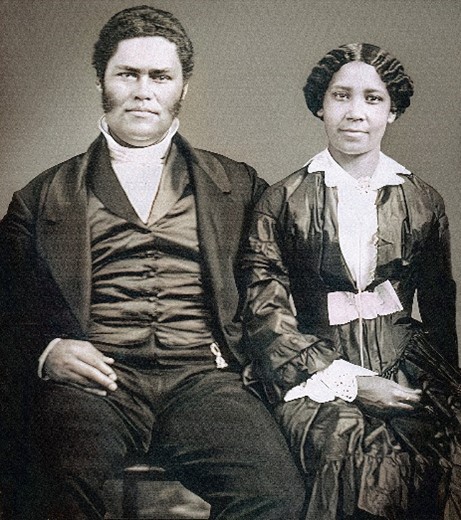
The Site of the John & Mary Jones House in Chicago, located at 45th Street and Vincennes Avenue in Bronzeville, embodies the enduring legacy of African American activism and leadership. Formerly the residence of John and Mary Jones, the house served as a pivotal center for civil rights organizing and community empowerment.

John Jones, a former slave turned successful businessperson and abolitionist, alongside his wife Mary, fostered a hub of social justice initiatives, including involvement in the Underground Railroad and advocacy for education and suffrage. Though the physical structure no longer stands, the site remains a symbol of African American resilience and the ongoing struggle for equality, reminding us of the profound impact of Black leaders in shaping Chicago’s history and the broader American narrative.

Quinn Chapel

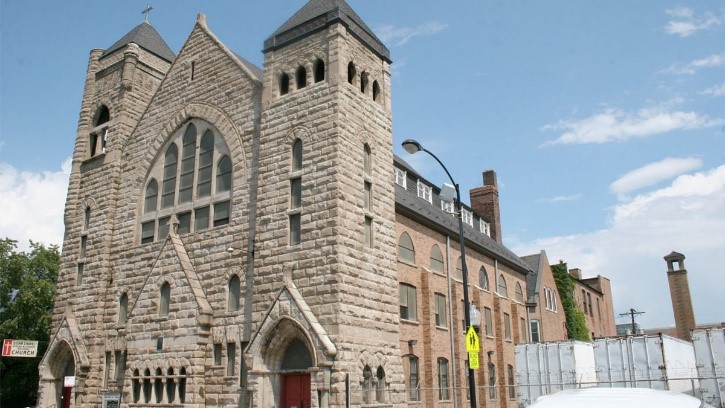
Nestled in Chicago’s Bronzeville neighborhood, the Quinn Chapel African Methodist Episcopal Church is a venerable symbol of African American history in Chicago.

Well before the Emancipation Proclamation, Quinn Chapel played a pivotal role in Chicago’s abolition movement and served as a vital “station” along the Underground Railroad. Over the years, it has welcomed esteemed figures such as Presidents William B. McKinley and William Howard Taft, educators George Washington Carver and Booker T. Washington, poet Paul Lawrence Dunbar, and renowned preachers like Rev. Martin Luther King, Sr., Dr. Martin Luther King, Jr., and Rev. Adam Clayton Powell, Jr.

More recently, Quinn Chapel has hosted prominent political figures including Governor Rod Blagojevich, Mayor Richard M. Daley, Congressmen Danny K. Davis and Bobby Rush, Jesse Jackson, Jr., Governor Pat Quinn, and Senator Barack Obama.

Additionally, Quinn Chapel counted among its members Milton Olive III, a posthumous recipient of the Congressional Medal of Honor, and remains an enduring symbol of resilience and community leadership.


The Old Post Office at 433 W Van Buren

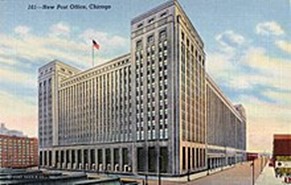
Our final landmark of note is the Old Post Office at 433 W Van Buren in Chicago. Originally built in the 1920s, this architectural marvel served as a bustling hub for postal activities in the city for decades. However, its historical significance extends beyond its structural grandeur. During the era of segregation and Jim Crow laws, Black postal workers faced immense challenges in pursuing their careers and contributing to the postal service’s operations. Despite systemic discrimination, many Black individuals persevered, working within the Old Post Office, and making invaluable contributions to its functioning.

The Old Chicago Main Post Office Building served as a crucial employment hub for African American Chicagoans, with many initially hired as temporary workers during the Depression, among them the renowned author Richard Wright. The National Alliance of Postal Workers, an African American union established in 1911 in St. Louis, played a pivotal role in challenging prejudice within the postal system. In Chicago, the union advocated for “color-blind” job applications and sought improved job opportunities for Black workers within the postal system. Over time, the union gained considerable influence, culminating in the historic promotion of Henry Wadsworth McGee as Postmaster of the Chicago post office in 1966, marking him as the first African American to hold such a position in a major metropolitan post office in the United States.

Today, the Old Post Office stands as a testament to the resilience and tenacity of Black individuals in the face of systemic barriers. Its revitalization and adaptive reuse reflect not only the city’s commitment to preserving its architectural heritage but also honoring the contributions of Black Americans to its cultural and economic fabric. As Chicago continues to evolve, the Old Post Office serves as a reminder of the struggles and triumphs of the past, inspiring future generations to strive for equality, justice, and opportunity for all.

We hope you’ve enjoyed and learned something from this special edition of the WJ Blog! Remember that Black History month doesn’t just end in February, so we hope you can take a moment to reflect on the very real ongoing struggles for Black Americans, as well as other communities of color and marginalized members of our society.

Let us take time to remember that to create a better society we must learn from the mistakes of our past and collectively recognize that the scars of years past can and do still influence the generations ahead. Please be sure to support communities of color this and every month in any and every way you can, whether it be supporting Black-owned businesses or otherwise.


Sources/Citations:

Links to support Black Owned Businesses in Chicago